Metal Gate Contractor in Carlsbad: How Automatic Gate Openers Keep People and Pets Safe
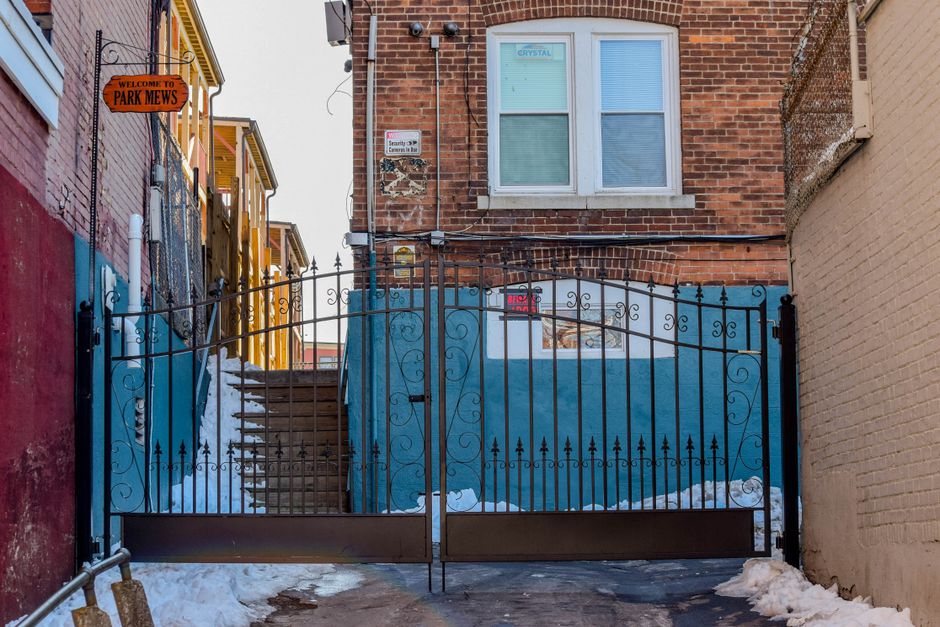
An automatic gate opener keeps people and pets safe through several layers working together: photo eyes that watch the opening, contact edges that feel pressure, built-in reversing that senses resistance, and a manual release for when power or the operator fails. No single layer is enough on its own, and in Carlsbad's salt air each one needs regular attention.
Start With the Pinch Points

Every automatic gate has entrapment zones, and the safety devices only make sense once those zones are identified. On a swing gate, the zones are the arc the leaf sweeps and the gap at the hinge side. On a slide gate, they are the closing edge, the receiving post, and the gap where the gate passes a fence or pillar.
Walk the full path of the gate once, slowly, with the operator switched off. Note every spot where a hand, paw, or small body could be pinched or pushed. Then check whether a safety device actually covers each spot.
Photo Eyes: The First Line of Defense
Photo eyes send an infrared beam across the gate path, either from a transmitter to a receiver or from a single unit to a reflector. When something breaks the beam, the operator stops or reverses the gate.
The limit to remember is that photo eyes protect only the line where the beam runs. One pair mounted low across the opening will not cover the swing arc behind a leaf, and it will not cover the closing edge itself. Photo eyes alone do not make a gate safe.
Mount height matters for pets and kids
A beam set only at bumper height can pass over a small dog or a toddler. Many installers add a second, lower pair of eyes to catch low obstructions. If a gate has only one pair, ask whether the setup covers anything shorter than the beam.
Test them monthly
With the gate closing, pass a solid object such as a cardboard box through the beam. The gate should stop or reverse right away. Never test with your body, a child, or a pet.
Coastal fog, dew, and sunset glare
In western Carlsbad, including the Village, Olde Carlsbad, and Terramar, marine layer fog, morning dew, and a thin salt film collect on photo eye lenses. The result can be false triggers that stop the gate for no reason, or a weak signal that works one day and fails the next. Wipe the lenses with a soft damp cloth every few weeks and confirm the alignment light shows a solid lock.
West-facing gates near the coast have a second problem. Low late-afternoon sun can shine straight into the receiver and cause erratic behavior. Small hoods or shades usually help, and swapping the transmitter and receiver sides so the receiver faces away from the sunset often solves it completely.
Contact Edges: What the Beam Cannot See
A contact edge, also called a sensing edge, is a rubber strip mounted on the leading edge of a slide gate or on the edges of a swing gate. When it is pressed, it signals the operator to reverse. It catches what photo eyes miss, such as a person standing right at the closing edge.
To test one, press firmly along the strip with a hand while the gate moves slowly away from you, or use a padded object while it closes. The gate should reverse. Check the full length of the strip, because a dead section is a common failure.
Sun and salt wear the rubber down
Coastal sun and salt air harden and crack rubber. Look for splits, stiffness, or a strip that has pulled loose from its channel. A cracked edge can fail to register pressure, and the fix is replacement, not tape.
Reversing: A Backup, Not the Plan
Inherent reversing is the operator's built-in sense of resistance, usually read from motor current or encoder feedback. If the gate meets something, it stops and reverses.
This is a backup layer. A heavy metal gate can apply serious force before the motor senses enough resistance to react, so reversing alone should never be treated as protection for a person or an animal.
Never turn up the force setting
The most common way a gate becomes dangerous is a homeowner raising the force or sensitivity setting to stop nuisance reversals. Those reversals are a symptom. They usually point to a mechanical problem such as a dragging wheel, a binding hinge, a bent track, or a sagging leaf. Fix the cause, and leave the setting where the installer set it.
The Manual Release and the Twice-Yearly Disconnect Test
The manual release is the safety feature for when power or the operator fails. Depending on the opener, it may be a key lock, a lever, or a hand crank on the operator. Know where it is, keep the key somewhere every adult in the house can find it, and practice once so the first attempt is not during an emergency.
Twice a year, release the operator and move the gate by hand. It should travel smoothly with moderate effort and stay where it is left. If it swings or rolls on its own, or takes real force to push, the operator is straining and the reversing system cannot judge obstructions accurately.
Slopes and hillsides
Driveways in La Costa, Aviara, and the eastern neighborhoods often slope. A swing gate on a grade can be hard to balance, and a slide gate on a grade can roll by itself if the brake or gearing fails. The disconnect test shows this quickly, and a gate that will not hold its position needs attention before it goes back on automatic.
Power outages and evacuation
Near the open space edges of eastern Carlsbad, a gate that cannot open during a power outage can trap vehicles when people need to leave. Battery backup that opens or cycles the gate on power loss is worth considering.
Wind: A Carlsbad Problem Most Guides Skip
Fall Santa Ana winds push hard against solid metal swing gates. The operator can read that pressure as an obstruction and reverse or stop partway open, which leaves a gate half-swung in the wind. Solid panels catch far more wind than open picket designs. A proper gate stop and lock, plus an operator sized correctly for the leaf, reduce the problem.
Pets Get Hurt in Places Sensors Never Reach
A gate that reverses on contact is not automatically safe for pets. Animals get caught in gaps and rollers that no sensor covers, sometimes while the motor is off.
- Bottom gap: A small dog can squeeze under a gate, then be caught when it moves. Check the clearance under the gate.
- Picket spacing: Check whether a head or body fits between pickets. Mesh on the lower section closes both gaps.
- Rear roller and fence gap: On slide gates, paws and fingers are pulled in where the gate passes a post or fence. Screen mesh on the gate and guards over exposed rollers close these points.
Controls, Signs, and Habits
Keep remotes, keypads, and push buttons out of reach of children. Mount fixed controls where the person pressing them can see the whole gate but cannot reach through it.
Warning signs belong on both sides of the gate. They tell visitors, delivery drivers, and children that the gate moves on its own. Sun fades them, so replace them when the lettering weakens.
Salt Air and the Wiring Behind It All
Coastal air corrodes sensor terminals, wire connections, and the control board. Green or white crust at a terminal causes intermittent faults that can quietly disable a safety input. Near the coast, connections deserve a yearly inspection, and sealed or coated components are worth asking about.
Signs a Safety System Has Failed
Stop using the gate in automatic mode if any of these appear:
- It does not reverse during the monthly test.
- The fault light blinks.
- It closes faster than it used to.
- It makes new grinding noises.
- It stops short of fully open or closed.
Close the gate manually and leave the operator off until a qualified gate technician has serviced it. A gate that moves on its own by default should be treated as a machine, not a fixture, and a few minutes of testing each month is what keeps people and pets clear of it.